
Queen Anne’s Arrest Report Sources
Queen Anne's County publishes no 72-hour, seven-day, or weekly booking log. The closest official option is the Sheriff's Office press-release archive. Posts reach back to at least 2017. A single entry might describe a traffic stop. It could also cover a drug arrest, commissioner action, bond, or case numbers. The archive is not a detention roster. It reads as news posts, not one row per booking. Someone arrested in Queen Anne's County may never show up there at all. An older release reflects what officials reported at the time. It says nothing about whether the person stayed in custody. It also omits how the charge ended in court.
The official sheriff archive capture shows dated, paginated narrative posts.
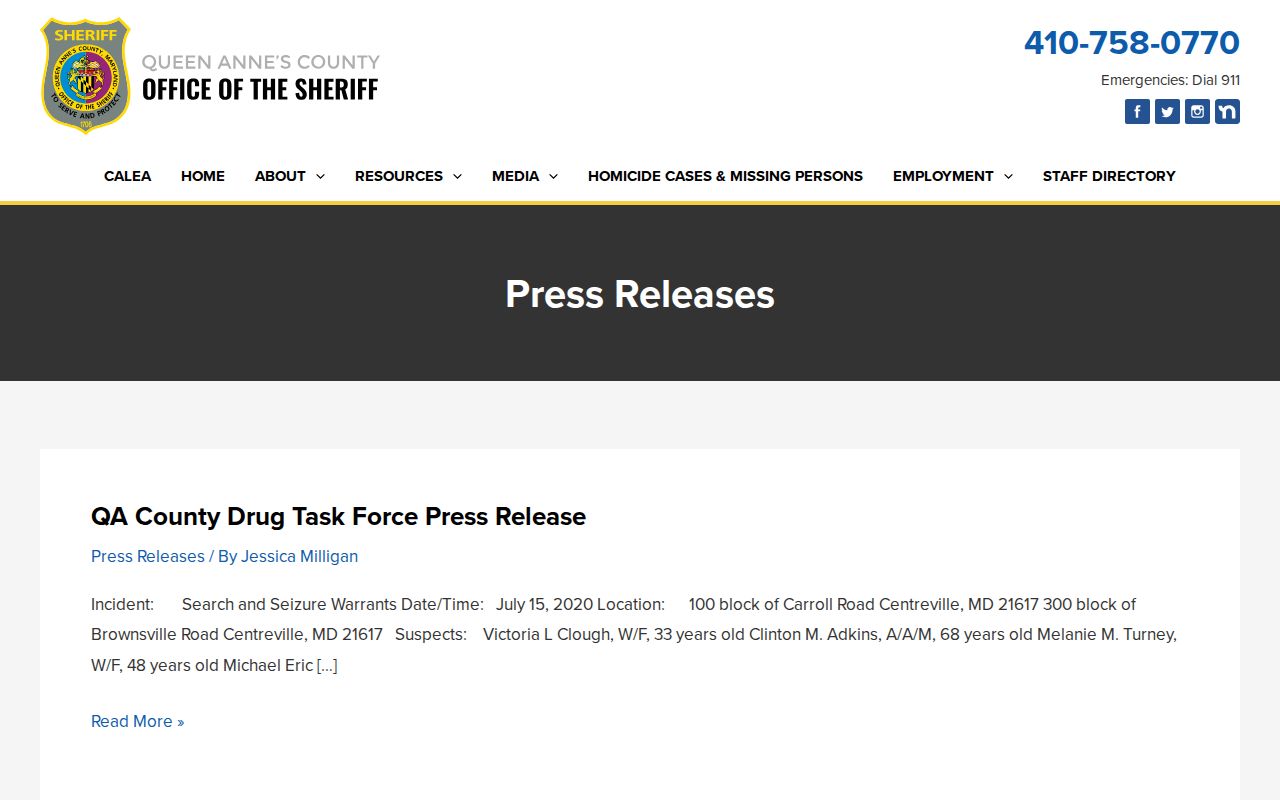
Use its dates as publication dates, not booking timestamps or proof of current detention.
Read Queen Anne’s Arrest Reports
Start with official material, then use journalism for context. Keep the dates straight: "published," "arrested," "booked," and "filed" can each fall on a different day.
- Open the sheriff press archive and scan post dates, headlines, agency names, and locations. Move through older pages when the event spans several days.
- Open the original release. Record the case number, alleged charges, reported commissioner or bond action, and the date the sheriff published it.
- Check Maryland Judiciary Case Search after filing. Match the county, court, name, case number, and charge before drawing any link between records.
- For a missing agency file, send a narrow written request to the office that made the arrest. State the date range, location, agency, name, and known case number.
- Use local news only as a secondary discovery route. Confirm its claims against the cited agency or court record.
Need a same-day custody answer? The Arrested Today page relies on a phone-and-record fallback instead. A multi-day archive cannot tell you who is in custody right now.
Queen Anne’s Report Fields
An official narrative may include many useful details, but no fixed field set is promised. Read the source label on each item, and never fill gaps with guesses.
| Possible entry detail | How to treat it |
|---|---|
| Name | Check identity and spelling; a match alone is not proof. |
| Event and publication dates | Keep them distinct from booking and court filing dates. |
| Agency and location | Use them to identify the correct records custodian. |
| Case number | Use it for a focused report or court search. |
| Charges | Describe them as charges at that stage. |
| Bond or commissioner action | Do not treat an initial action as a final disposition. |
| Photograph | No routine county booking-photo set was found; sheriff release is case by case. |
The official Sheriff’s Office sample release illustrates narrative sourcing with charge and commissioner context.
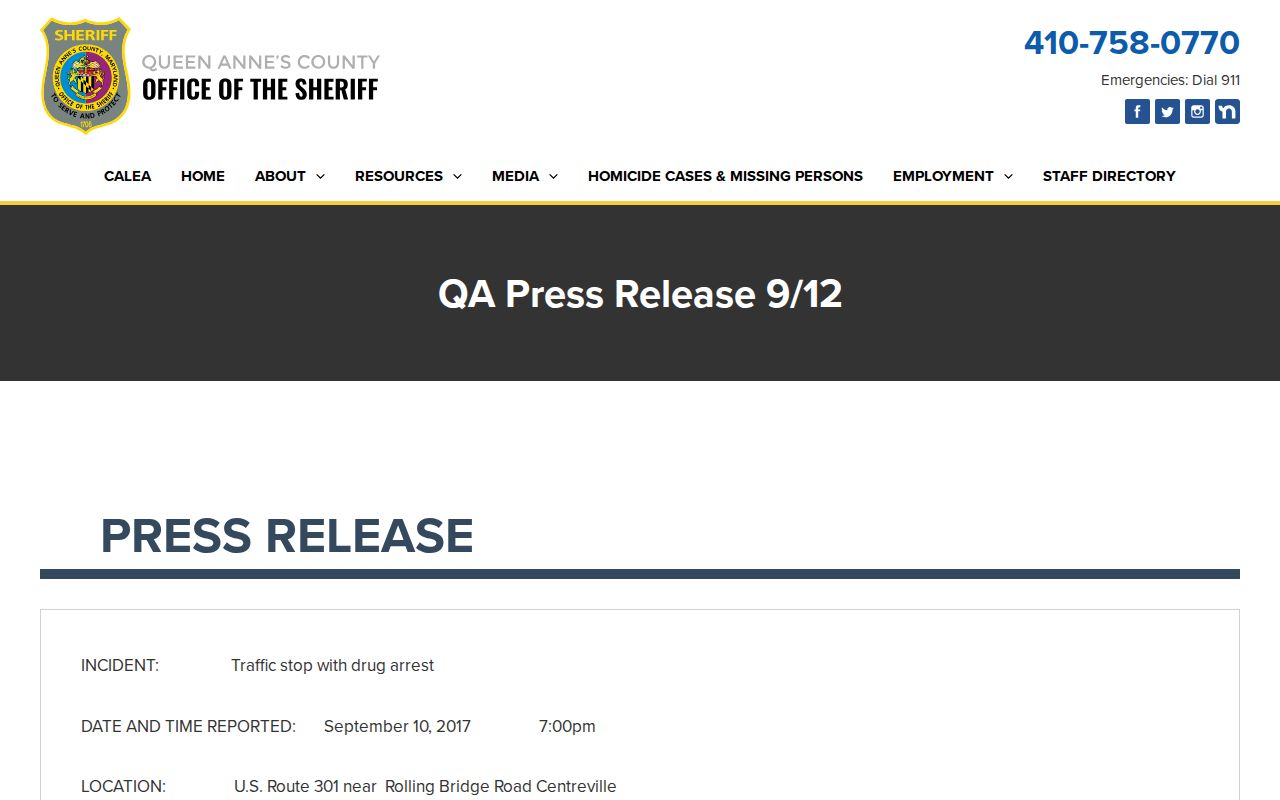
Its format shows why selected releases cannot be counted as a complete booking table.
Weekend Arrest Report Gaps
Queen Anne's County posts no weekend or holiday schedule for a blotter. The Detention Center runs around the clock. Its hours create no web-posting promise. Sheriff releases appear when an event is picked for public notice, while court data can follow only after charging and filing, and news outlets run on their own clocks. So a pile of Monday posts says nothing about a weekend surge. Several arrests may be grouped, delayed, or left out. One event can even produce more than one update. A quiet weekend online does not mean nobody was arrested in Queen Anne's County.
Need a county police file instead? The Sheriff's Office takes written requests through its public-information route. The posted report fee is $10, subject to confirmation. The FAQ estimates seven to ten business days after review, with closed-case conditions. That is an access timetable, not a publication schedule.
Queen Anne’s Arrest Archives
No modern retention period for booking records or booking photos is published. Ask the sheriff's records custodian which schedule and record series governs the item. The Maryland State Archives warns that approved schedules can be superseded. Confirm any catalog result with the agency or records-management office.
Historic sources answer narrower questions. The Maryland State Archives sheriff guide points to old account, day, and fee books. Those are not a modern jail roster. The Circuit Court records page lists older criminal dockets in Papervision. They run from 1945 through November 2000. Court dockets are not booking-photo archives.
For older cases, the Queen Anne's Circuit Court records page can route a court search. The Record-Observer microfilm collection supplies dated newspaper context. Ask the current sheriff first whether the law-enforcement record is still in agency custody. If it was transferred, request the series and container details the archive needs.
Note: Retention, public access, web publication, and search-engine visibility are separate questions with different answers.
Local Queen Anne’s Arrest News
Newsrooms can fill gaps that official channels leave open, though completeness is never their promise. The 47abc/WMDT Queen Anne’s County tag works as a rolling index of stories. It updates often. The Eastern Shore Undercover county section adds a second editorial stream, paginated so older arrest coverage stays reachable. Bay Times and the Record-Observer round out the week in print, but their archive depth runs shallower than the daily outlets.
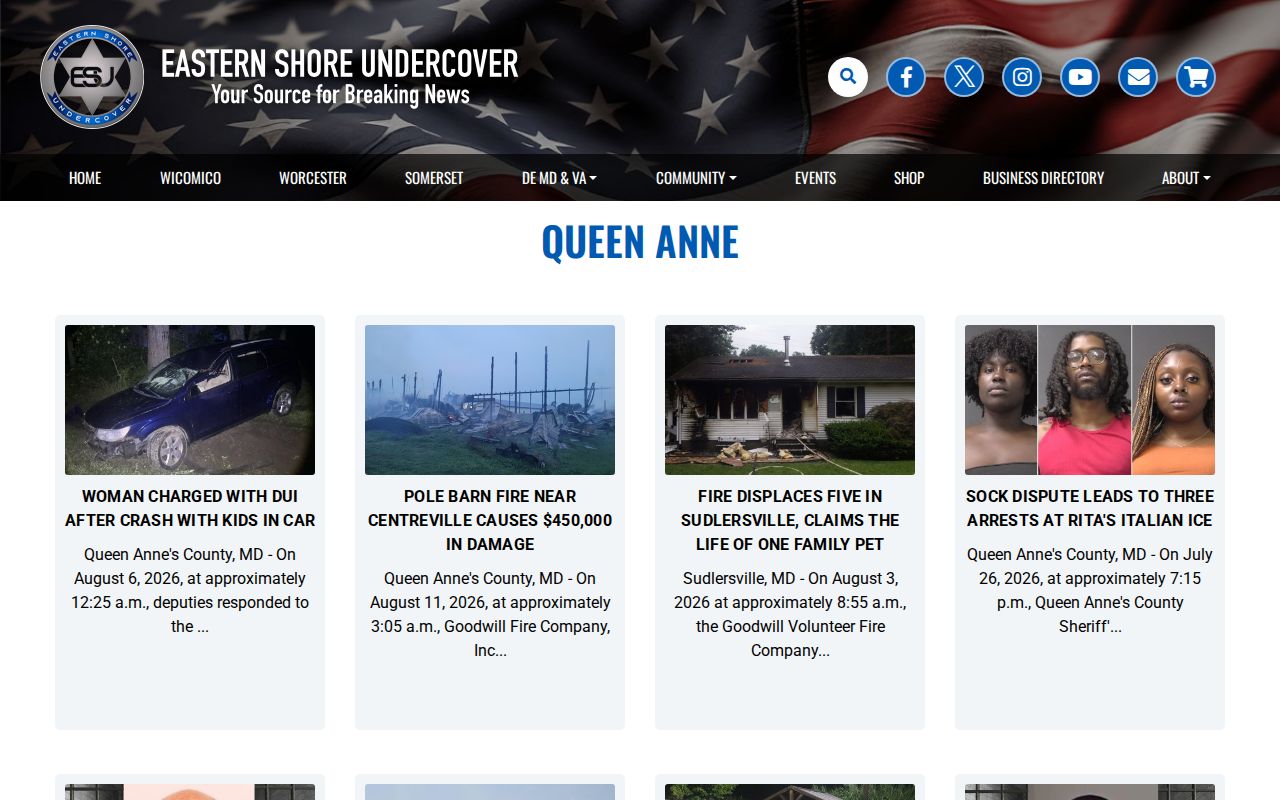
Local journalists often paraphrase a sheriff or police statement. Treat their wording as a summary, not the record itself. When accuracy counts, go back to the official file. Photos deserve caution too. A scene shot, a supplied portrait, or a file image can stand in for a booking photo. Neither names nor images from these outlets appear here. For any article, jot down four things: its date, the agency cited, the location, and whether it covers a fresh arrest or a later court event. Story counts measure editorial choices. They say little about real Queen Anne’s County booking volume.
Geography does not settle jurisdiction. Centreville Police, the sheriff, Maryland State Police, or another agency may make the arrest. Confirm which one acted before requesting a file. Current custody always needs a fresh check. The Denton Center handles local detention questions, VINE may carry an eligible record, and DPSCS covers qualifying state custody. A press report can linger online long after release.
Maryland Case Search is only a summary. The clerk holds the official case file, and restricted or expunged material may not surface in either place. A blank result there does not mean no arrest occurred. Match case number, court, date, and charge before linking a namesake to a report. A first bond decision is not the end of the case, since later filings can change the public account.